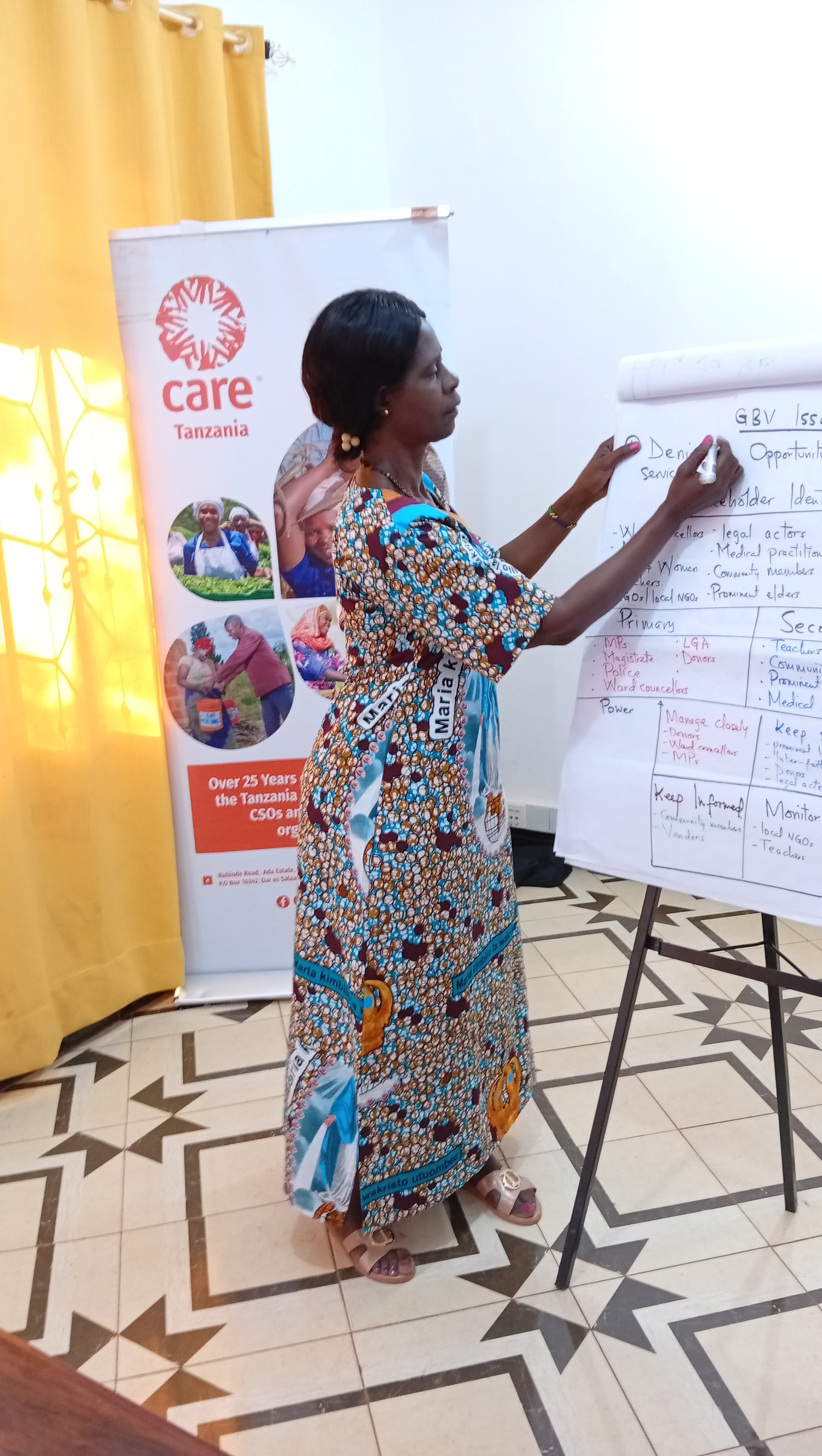
Background
The Women Movement Training aims to strengthen women’s leadership, participation in decision-making, economic empowerment, gender equality advocacy, and collective action within communities. The training empowers women to organize themselves, understand their rights, and advocate for social and economic transformation.
Overall Goal
To build a strong women’s movement that promotes gender equality, women’s rights, economic empowerment, and community leadership in Kigoma/Kasulu.
Specific Objectives
Participants will be able to:
• Understand women’s rights and gender equality concepts
• Strengthen leadership and advocacy skills
• Promote women’s economic empowerment
• Address gender-based violence (GBV)
• Build community women networks and movements
• Improve participation in governance and decision-making
• Develop action plans for community transformation
2. TRAINING MODULES
MODULE 1: Understanding Gender and Women’s Rights
Topics Covered
• Meaning of gender
• Difference between sex and gender
• Gender roles and responsibilities
• Gender stereotypes
• Gender equality and equity
• Women’s human rights
• International conventions on women’s rights
• Tanzania gender policies and laws
Key Learning Points
• Women and men should have equal opportunities
• Harmful cultural norms affect women’s development
• Women have legal rights to education, land, leadership, and economic resources
Activities
• Group discussions
• Role plays
• Gender analysis exercises
• Community case studies
MODULE 2: Women Leadership and Participation
Topics Covered
• Meaning of leadership
• Qualities of effective women leaders
• Barriers facing women leaders
• Public speaking and confidence building
• Decision-making skills
• Political participation
• Leadership ethics and accountability
Practical Sessions
• Public speaking practice
• Leadership role-play
• Confidence-building exercises
Expected Outcomes
Participants gain confidence to:
• Speak in public
• Lead community groups
• Participate in village meetings
• Contest leadership positions
MODULE 3: Women Economic Empowerment
Topics Covered
• Financial literacy
• Savings and loans groups (VSLA)
• Entrepreneurship skills
• Business planning
• Income-generating activities
• Access to markets
• Land ownership rights
• Household financial management
Activities
• Business idea generation
• Budget preparation
• Savings simulation
• Group enterprise discussions
Key Message
Economic independence strengthens women’s voice and decision-making power.
MODULE 4: Gender-Based Violence (GBV) Prevention and Response
Topics Covered
• Types of GBV
• Causes of violence against women
• Effects of GBV on families and communities
• Child marriage and early pregnancy
• Reporting mechanisms
• Survivor support services
• Community prevention strategies
Methods Used
• Testimonies
• Drama and storytelling
• Community mapping
• Referral pathway exercises
Key Outcomes
Participants understand:
• How to prevent GBV
• Where survivors can get support
• Community responsibility in protecting women and girls
MODULE 5: Advocacy and Community Mobilization
Topics Covered
• Meaning of advocacy
• Community mobilization techniques
• Building women networks
• Campaign planning
• Negotiation and influencing skills
• Working with local government
• Social accountability
Practical Exercises
• Stakeholder mapping
• Advocacy message development
• Community campaign planning
Expected Results
Participants become community advocates for:
• Women’s rights
• Access to services
• Equal participation
• Protection against violence
MODULE 6: Building Strong Women Movements
Topics Covered
• Meaning of a women movement
• Importance of collective action
• Networking and coalition building
• Sustainability of women groups
• Conflict management
• Team building
• Mentorship and peer support
Group Work
• Formation of community action groups
• Development of local women movement structures
MODULE 7: Communication and Media Engagement
Topics Covered
• Effective communication skills
• Community awareness creation
• Social media for advocacy
• Radio and public forums
• Storytelling for change
Activities
• Message development
• Mock radio interviews
• Community awareness presentations
MODULE 8: Action Planning
Topics Covered
• Community problem identification
• Setting priorities
• SMART objectives
• Action plan development
• Monitoring progress
Final Output
Each group develops:
• Community action plans
• Advocacy plans
• Women empowerment activities for implementation
3. TRAINING METHODOLOGY
The training uses participatory approaches including:
• Group discussions
• Role plays
• Brainstorming
• Case studies
• Experience sharing
• Community mapping
• Presentations
• Practical exercises
4. EXPECTED TRAINING OUTCOMES
After the training:
• Women become more confident leaders
• Increased women participation in governance
• Stronger women support networks established
• Improved economic empowerment initiatives
• Increased awareness of GBV prevention
• Community advocacy initiatives launched
5. TARGET BENEFICIARIES
• Women leaders
• Youth women
• Community activists
• Women savings groups
• Civil society organizations
• Local government leaders
• Religious and traditional leaders
6. MONITORING AND FOLLOW-UP
CARE Tanzania and local partners may conduct:
• Community follow-up visits
• Mentorship sessions
• Movement strengthening meetings
• Monitoring of action plans
• Networking forums for women leaders
7. CONCLUSION
The Women Movement Training in Kigoma/Kasulu is designed to empower women socially, economically, and politically so they can become active agents of change within their communities. The training strengthens solidarity among women and promotes sustainable gender equality and inclusive development.